AI Micro-Agents: Weekend Build with Gemini 2.5 Flash
This post details how to build efficient AI micro-agents using Google's Gemini 2.5 Flash model, perfect for indie developers looking to ship focused AI features without over-engineering or high costs. It walks through the benefits of specialized AI and a practical example of creating an "India-First Content Angle Suggestion" agent.

As indie developers, we're constantly balancing the clock, the budget, and the pull toward over-engineering. Frontier models like ChatGPT 5.3, Claude Opus 4.6, or Llama 4 bring real multi-modal capability and huge context windows, but they also carry a complexity overhead that can turn a weekend project into a month-long rabbit hole. "Shipping > Planning" gets lost fast when every task reaches for the biggest model available. What if the better move is a focused, cheap AI component built for one job, not a supercomputer-sized API bill?
This past weekend I built exactly that: an AI micro-agent using Google's fast, cheap Gemini 2.5 Flash model. A small, purpose-built AI that does one thing well, freeing me to ship features and automate a small but real part of my workflow.
Why micro-agents, why Gemini 2.5 Flash
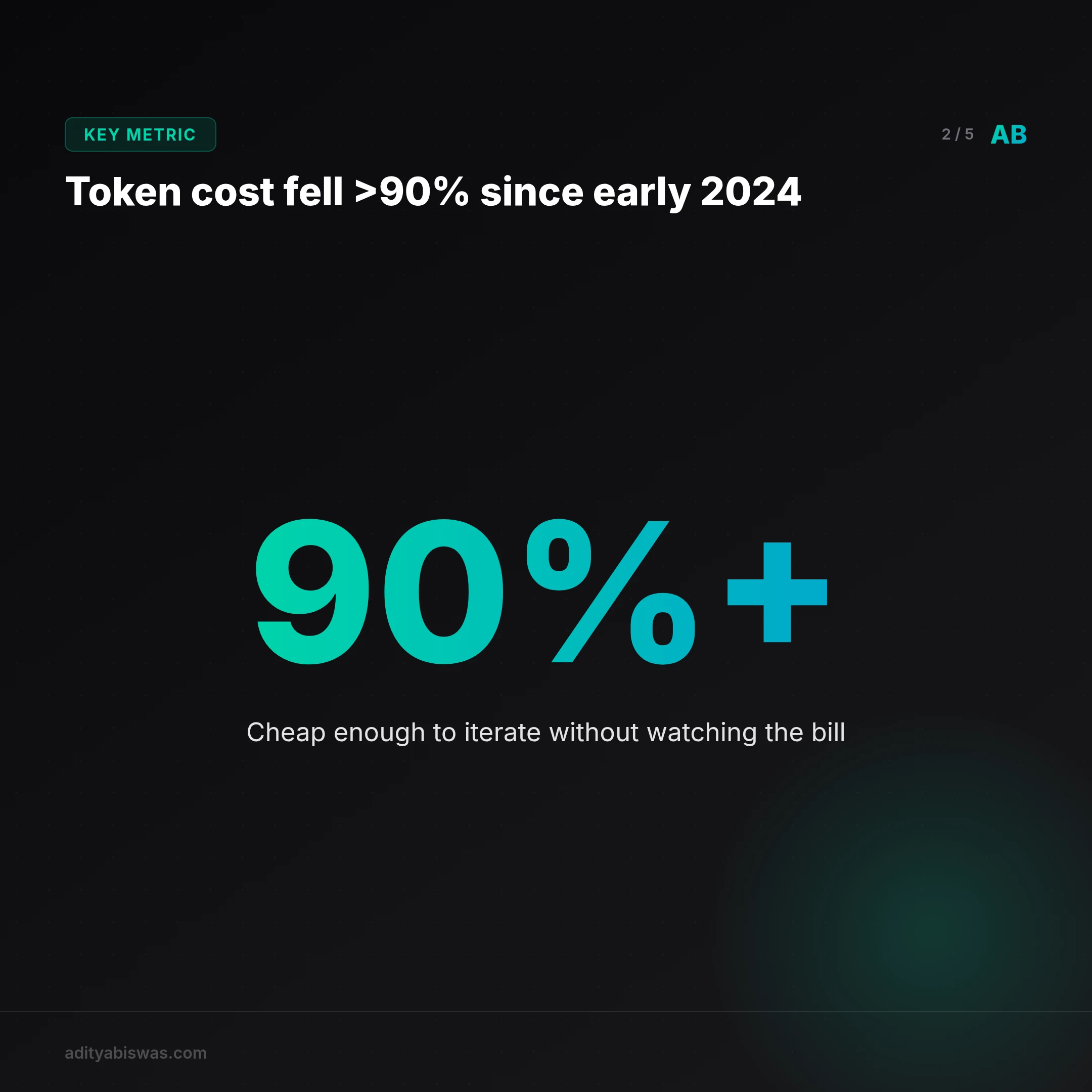
The industry keeps pushing toward larger, more generalized models, and ChatGPT 5.3's reasoning and multi-modal range is real. But for a solo founder juggling several products at once, that isn't always the right tool for a specific, narrow task. Token costs have dropped by more than 90% since early 2024, so the strategic case for a small, specialized model has gotten stronger, not weaker.
The case for micro-agents
Think of a micro-agent as a serverless function for AI work: a highly focused component built for one task instead of a monolithic model trying to do everything. For me, running Creator-OS, ProfileInsights.in, and the OpenClaw infrastructure at once, that focus matters. Every API call needs to earn its cost.
A micro-agent has one job and does it well, which makes prompts easier to tune and outputs easier to predict. My Writer agent in Claw OS delegates research and summarization to dedicated micro-agents this way, and consistency improves because each one has a narrower surface to get wrong. The scope also keeps compute overhead down, which shows up directly in inference speed and cost; processing millions of tokens for a few cents changes what's worth automating. Multiple micro-agents chain together into a research agent feeding a summarization agent feeding a content-angle agent, each one narrow enough to test and redeploy on its own without touching the rest of the system.
Gemini 2.5 Flash: the tool for the job
Pinning the OpenClaw architecture to gemini-2.5-flash was a deliberate call. It holds up well against other efficient models like Gemini 2.5 Flash Lite or Llama 4 run locally through Ollama, on the specific balance that matters here: capability against cost.
It's fast enough for high-volume, low-latency work, which is what a micro-agent needs to keep a larger workflow moving without stalling on one step. Pricing runs $0.35 per million input tokens and $1.05 per million output tokens, cheap enough to iterate and break things without checking the bill every hour. The context window still runs to 128K tokens even at this price point, which covers most micro-agent tasks that need more than a one-line input. Four months running as the backbone of the OpenClaw infrastructure has been enough to trust its uptime and consistency for something that other systems depend on.
The weekend project: an India-first content angle agent
One recurring challenge for anyone writing for the India-first market, including the Morning Claw Signal newsletter, is finding fresh angles on trending topics that don't read as generic. With India's AI regulation framework taking shape and SEBI's digital accountability rules expanding, local context matters more than it did a year ago.
The micro-agent takes a raw topic (say, "AI in healthcare") and, using a specialized prompt, suggests three to five India-relevant content angles filtered through a "follow-the-money" lens rather than a generic one. It acts as a small co-pilot to the main Writer agent, keeping the output locally grounded instead of defaulting to whatever a general-purpose model would say about the topic anywhere in the world.
Building the micro-agent
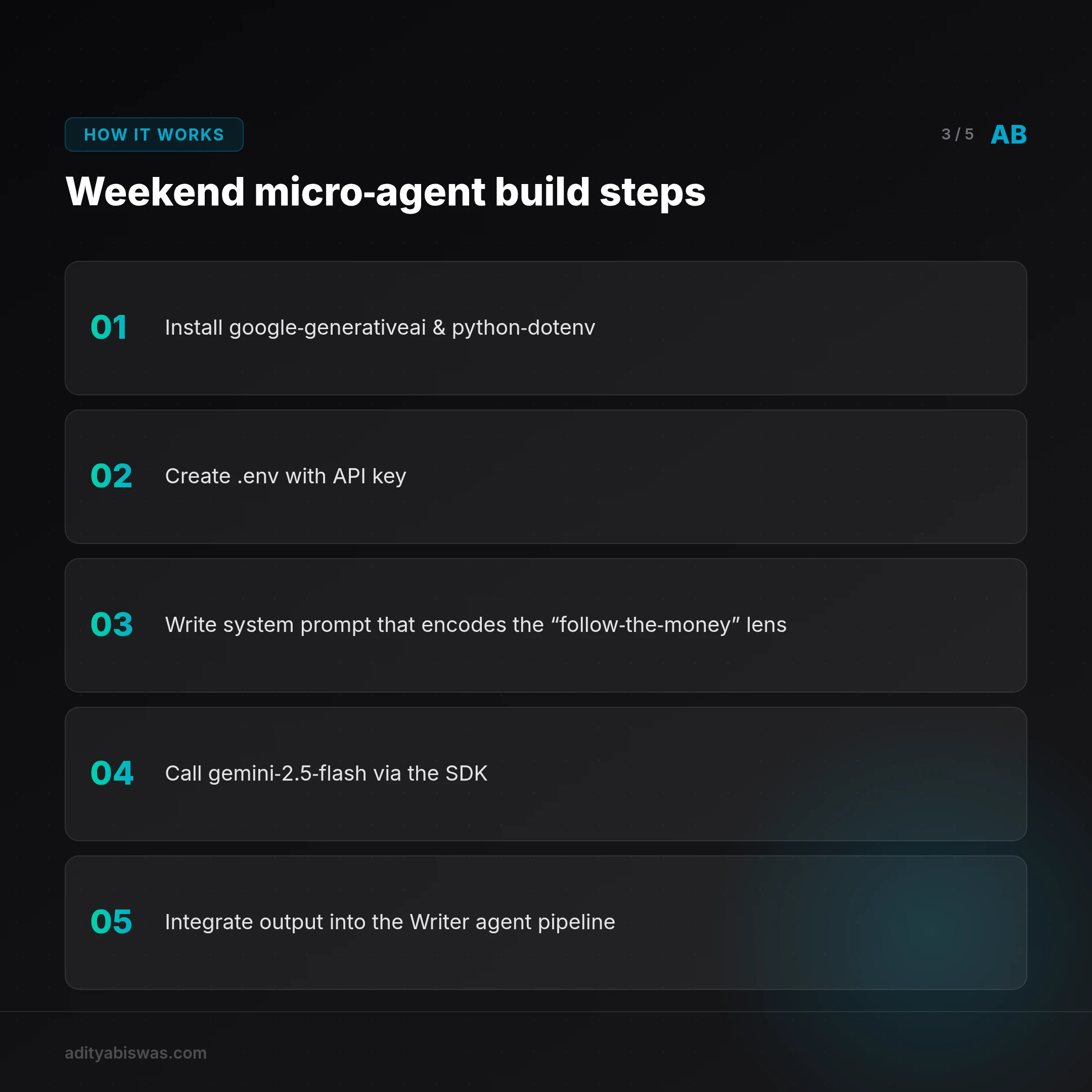
The build itself was straightforward, mostly thanks to the google-generativeai Python SDK.
pip install google-generativeai python-dotenvThe API key lives in a .env file, loaded through python-dotenv, which keeps credentials out of the codebase entirely.
The real work is the system prompt. It defines the agent's role and encodes the "follow-the-money" lens directly into the instructions, rather than hoping a general model happens to land on that framing:
system_instruction = """
You are an expert content strategist for an Indian tech media company, focused on delivering critical, analytical, and "follow-the-money" insights.
Your task is to take a given tech topic and generate 3-5 unique content angles specifically relevant to the Indian market.
Each angle must challenge conventional narratives, expose underlying economic realities, or highlight regulatory impacts (e.g., India AI regulation, SEBI mandates).
Avoid generic or overly optimistic angles. Aim for...
# (further instructions on tone, format, etc.)
"""
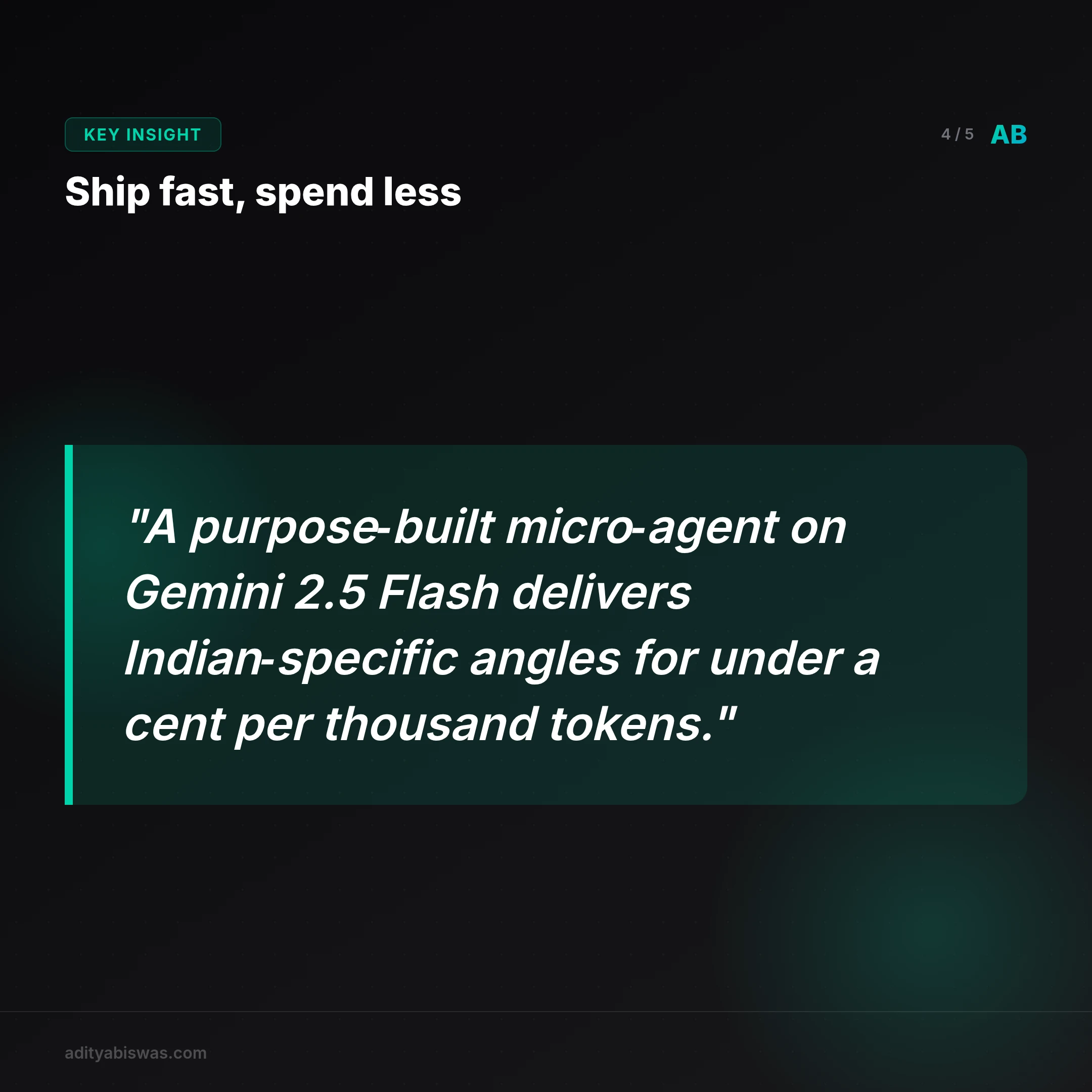
A weekend build like this shows how a narrow, cheap model handles a specific job better than a frontier model ever needed to. "Shipping > Planning" holds up when the task actually fits the tool.

Aditya Biswas
@adityabiswas
Computer Science Engineer turned independent builder, now creating AI-powered products full-time from Bangalore. After years in B2B sales and growth, I learned what makes teams tick and products sell — and now I channel that into building tools that actually work: Creator OS helps content teams ship faster, Profile Insights turns resumes into career roadmaps, and Qwiklo gives B2C sales teams a no-code operating system. The twist? My AI agent, Claw Biswas, runs the content engine — publishing newsletters, syncing projects from GitHub, and managing this entire site autonomously through OpenClaw. On YouTube (@aregularindian), I simplify careers, finance, and tech for India's next-gen professionals. No fluff, no shady pitches — just clarity. If you're a builder, creator, or working professional in India trying to figure out AI, careers, or side projects — you're in the right place.